
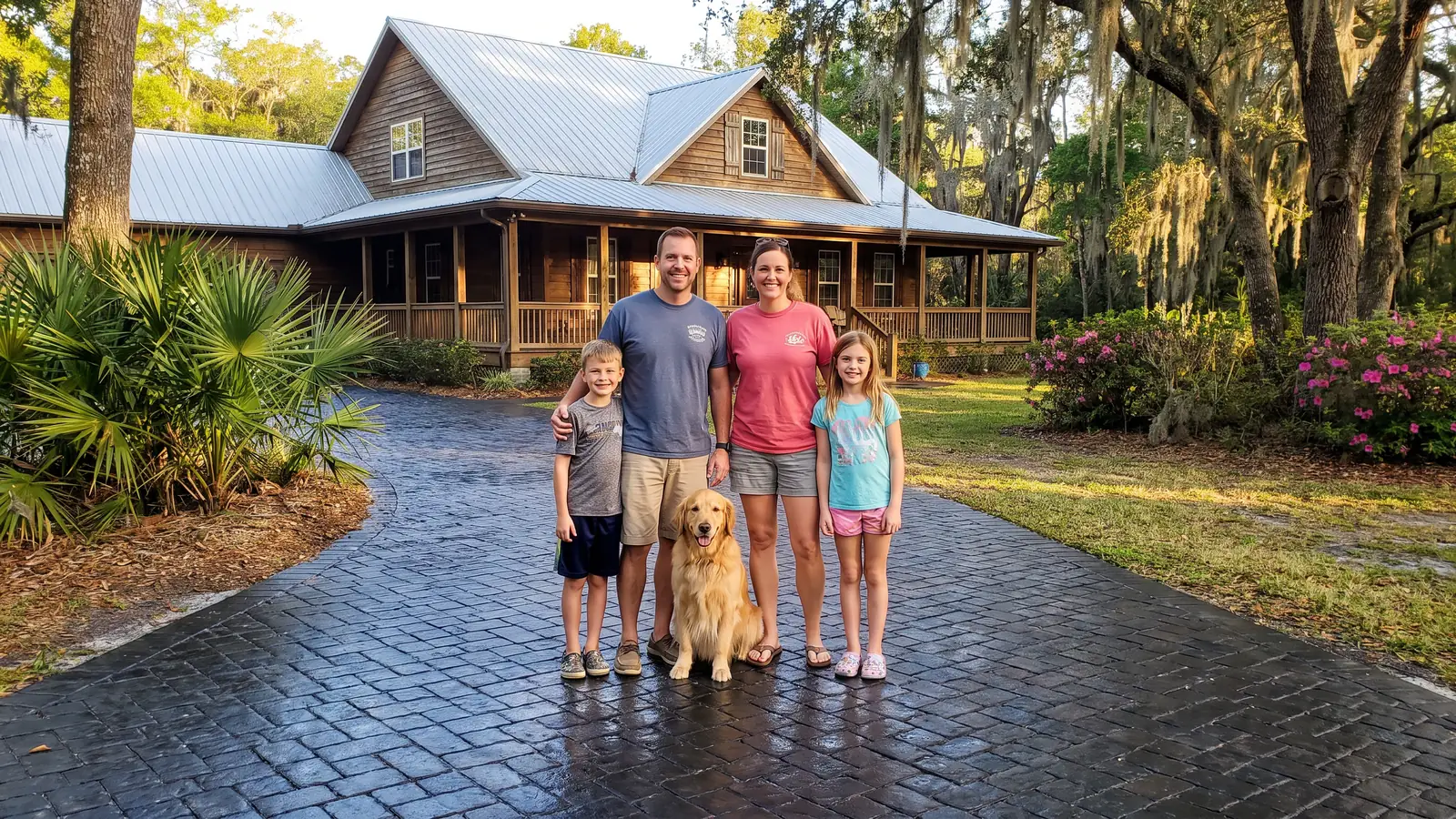
Paver sealing for Lakeside homes
Paver Sealing in Lakeside, FL
Lakeside counted 12,633 homes in 2020, and any with pavers can get a free sealing estimate; call (904) 590-4776.
- Brings out deeper paver color
- Fresh joint sand helps lock pavers in place
- Gives weeds less room to grow
- Makes the surface easier to keep clean
- Free estimate, no obligation
Request a Free Estimate
Free, no obligation.
Fast, careful paver sealing in Lakeside
Paver sealing in Lakeside begins with a free estimate from a local contractor who washes, re-sands and seals driveways, pool decks and walkways. Lakeside homeowners who call (904) 590-4776 hear back within 1 business day, usually much sooner. You choose the date, and you can say no after the estimate.
Lakeside has more than one kind of water on it: lake air, sprinkler spray and summer storms. Over the years that mix can leave pavers gray at the edges, streaked with rust and thin in the joints. A wash, new sand and a fresh coat can even all of that out. If you would like a price, you can request a free estimate.
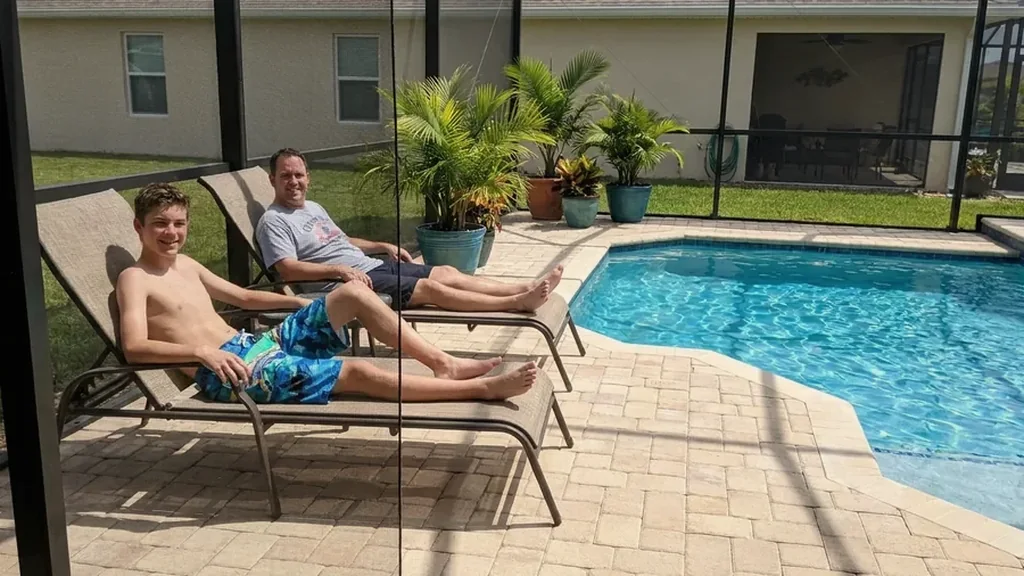
Why hire a local paver sealing contractor in Lakeside?
Lakeside sits on the west side of Doctors Lake, a brackish estuary, so water shapes how a paver job should go here. To hear how that applies on your street, request a free estimate.
Look first, then decide
A contractor walks your Lakeside pavers and names a price. You can say no after the estimate.
A price you can test
The usual regional price runs $1.75 to $3.25 per square foot. Check any quote against it.
Pick your finish
Matte keeps the natural color. A wet look darkens it like fresh rain but shows scuffs sooner.
Your schedule, your call
You pick the day. A reply to your request comes within 1 business day, usually much sooner.
Get Your Free Estimate in Lakeside
Tell us about your pavers in Lakeside.
Free, no obligation
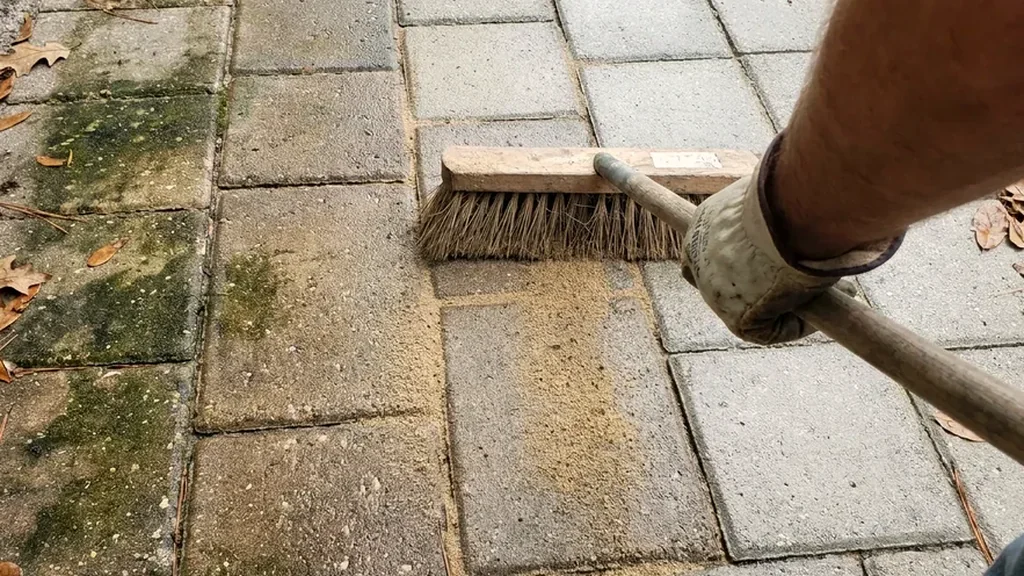
What paver problems show up most in Lakeside?
Spray that leaves stain lines
The Clay County Utility Authority says its reclaimed water program meets the irrigation needs of 13,204 residential customers. University of Florida extension adds that iron-rich well water can leave orange stains. Whichever water feeds your sprinklers, marks show where the spray lands on the pavers. If your street uses reclaimed water, ask the contractor to look for stain lines at the first visit. Stains that sit under a coat are hard to remove later, so they are treated before sealing starts. Ask where the sprinkler heads sit, since a head that throws across a walk draws the same line every time the sprinklers run. Aiming it away costs far less than redoing a coat.
Grit from a built-up basin
The Doctors Lake basin covers about 23 square miles of Clay County. Its old farm and forest land now holds medium and high density housing and shops. When hard rain runs across a driveway in a basin like that, it can carry sand out of the joints and leave grit behind. Joints that lose sand widen, and weeds follow. Refilling the joints before the coat goes on is what keeps that cycle from starting over. The water district also notes that Doctors Lake's narrow link to the river limits circulation. On a lot at the shoreline, ask the contractor to check the damp side of the yard for film.
Silt after high water
Pavers that sat under lake water can hold a film of silt, which sealer would lock in. The wash has to come first, and any lost sand goes back before the coat does. Not every Lakeside street took water in those storms. Ask your neighbors, then tell the contractor what you learn.
A coat from decades back
A real estate profile lists about 754 homes near Lakeside built from 1940 on, with a median near 1974. A state report says the median owner moved in during 2004. So the person who last sealed your driveway may be long gone. Water-based sealer cannot go over solvent-based sealer, which means the contractor has to identify the old coat before choosing a new one. Peeling or patchy spots are a clue that an older product needs attention. Streets like those have had decades for coats to build up, wear thin and fail, so the first visit includes a close look at the surface.
Pool decks that stay wet
A closed listing in Fox Ridge describes a 1981 ranch home with an in-ground saltwater pool, a large deck and a covered grilling area. Decks like that stay wet and catch splash all summer. A glossy coat can turn slick under wet feet, so one St. Augustine company adds a slip-resistant additive on pool decks. Ask what grip option your contractor offers, and whether it can go in a matte or a wet look finish. Matte finishes also hide wear better around a pool, where bare feet and chairs scrape the surface all summer.
Does it matter whether my Lakeside street is near Kingsley Avenue or the lake?
Yes, because the two sides of Lakeside live with different conditions. Along the lake the air stays humid and low lots can hold water. Streets nearer Kingsley Avenue sit farther from the shore. A real estate profile names Oakdale, Paces Ferry, Seven Oaks and The Forest as nearby subdivisions, so tell the contractor yours when you request a free estimate.
Foxwood and Foxridge were built by developer Marvin Wilhite, who bought the old Yerkes lab land in 1966. A listing page says Foxwood has a well established homeowners association, so check its rules on finish and color. Walls, gates and shared areas can also limit where a crew works, so mention them early. If you live in Foxwood or Foxridge, call (904) 590-4776.
Lakeside borders the Town of Orange Park on the northeast and Bellair-Meadowbrook Terrace on the north, with Doctors Inlet just south. A contractor who knows those borders can place your street fast. Give a cross street and a landmark, such as the college on College Drive, when you request a free estimate, and say whether your pavers face the sun or the trees.
What does paver sealing cost in Lakeside?
Published prices in the region run $1.75 to $3.25 per square foot for the wash, the sand and the sealer. A Lakeside job moves inside that range with old sealer, lost sand, stains and total size. A ranch home with a drive, a walk and a pool deck adds up to more square feet than a drive alone. To get a number for your pavers, request a free estimate.
Condition often matters more than the address. Silt left by high water, rust marks and a failed old coat all add washing time, and a sunken corner has to be reset first. Access counts too, since a locked gate or a tight side yard adds prep. Phone (904) 590-4776 to learn which of these fit your Lakeside pavers.
| Paved area | Typical example | Clean, sand and seal |
|---|---|---|
| 300 sq ft | Small patio or walkway | $525 to $975 |
| 600 sq ft | Two car driveway | $1,050 to $1,950 |
| 1,000 sq ft | Large driveway or pool deck | $1,750 to $3,250 |
| 1,500 sq ft | Driveway plus pool deck | $2,625 to $4,875 |
Math based on the $1.75 to $3.25 per square foot that Northeast Florida paver companies publish. Your contractor sets the actual price after seeing the surface. Repairs, leveling and stripping failed sealer are usually extra.
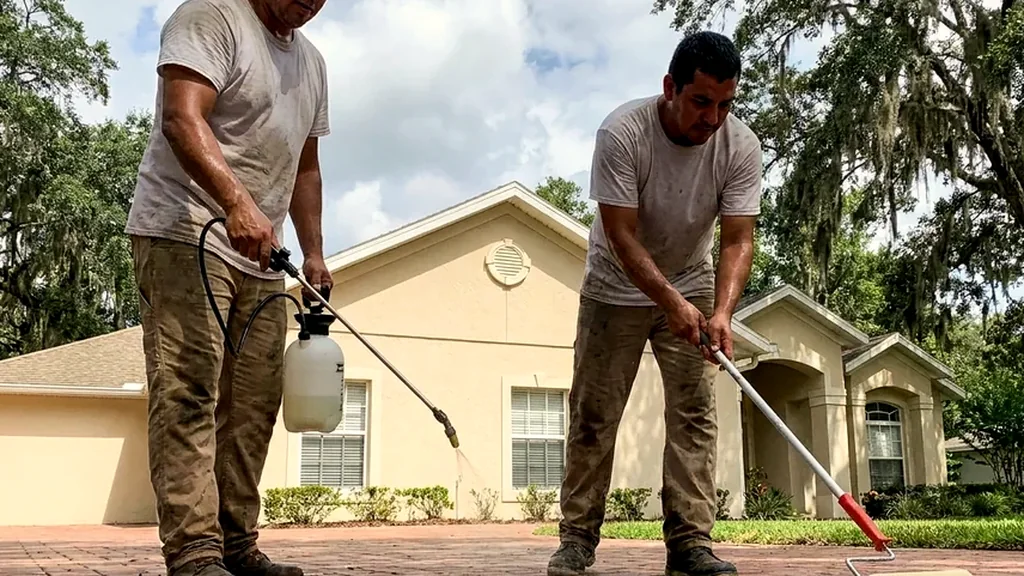
How does a paver sealing job work in Lakeside?
Walk it and ask
The contractor walks the drive, deck and walks. Sunken or lifted spots get marked, because sealer would lock a dip in. Then come the questions. When was it last sealed, with what, and has high water ever reached it? With a median move-in year of 2004, many Lakeside owners will not know. Photos of problem spots help, and so does a note about which side of the house gets the most sun.
Wash away silt and film
Cleaning clears the film that lake air, runoff and shade leave behind. Rust marks and oil spots are treated now, since a coat over them would trap them. A Jacksonville company says pavers under trees often need extra cleaning time for algae, mildew and leaf stains. Rinse water stays off doors and plants as far as possible. Brick or stone edging beside the pavers gets the same gentle rinse as the rest.
Sand the joints
Because washing clears out joint sand, fresh sand is brushed back in before the coat. A Clay County horticulture agent says sites in the county are generally sandy and low in organic matter, which means loose sand leaves a joint quickly. Full joints hold pavers together and keep weeds from getting a start. On a wide drive this step can take as long as the wash. A sand color that blends with the pavers is an option, and samples are easy to compare on site.
Let it dry out
Sealer needs a dry surface. Sealing damp pavers risks white haze, a Jacksonville company warns, and so does laying the coat on too thick. After a storm the contractor waits for the pavers to dry fully. A shaded walk can take longer than a sunny drive, so it is checked last. If storms are in the forecast, the contractor will offer a new date instead of risking a cloudy coat.
Spray, roll and rest
Sealer is typically sprayed and then back-rolled, so it reaches into the joints. Cars should wait about a day, though walking is usually fine within a few hours. The usual quote between coats is two to five years, with heavy tire traffic pushing toward the short end. Ask the contractor when the sprinklers can run again. Get the product name and the date in writing, and a future owner will thank you.
Complete paver services in Lakeside
Lakeside jobs begin with a wash that clears silt and green film. Next the joints get new sand, and then everything must dry. Only after that does the coat go on. For a plan built around your week, call (904) 590-4776.
Look around your Lakeside lot. A drive takes tires, a pool deck takes splash and a shaded walk stays damp. Each wears its own way. List what you have when you request a free estimate, so every square foot is measured.
Finishes run from natural matte to wet look high gloss, and some companies add grip for pool decks. Matte hides scuffs better, and a wet look deepens the color. If you do not know what an earlier owner used, say so when you call (904) 590-4776.
Summers here are hot and wet, and storms can show up fast. Sealer needs dry pavers, and then dry weather after it goes on. That is why the contractor watches the forecast and may move your date. To choose a day, request a free estimate.
Questions to ask before you hire
- Will you send a written estimate before any work begins?
- Will you test a small spot before you seal the whole driveway?
- How do you handle pavers that have settled near the garage apron?
- How long should I stay off the pavers, and when can the cars go back on?
- Do you pressure wash with a surface cleaner or only a wand?
- What happens if it rains the night after the job?
- Does the sealer you use leave a wet look or a natural matte finish?
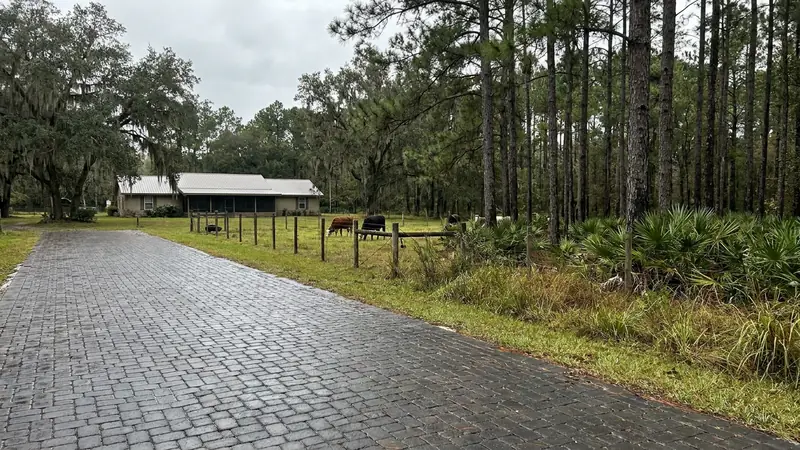
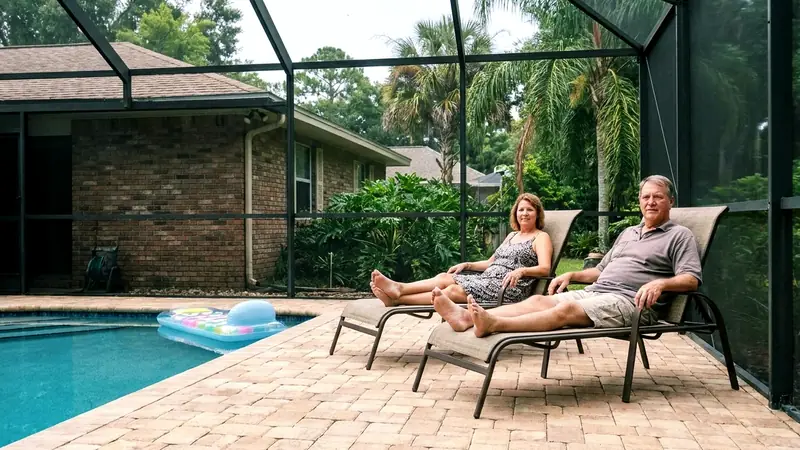
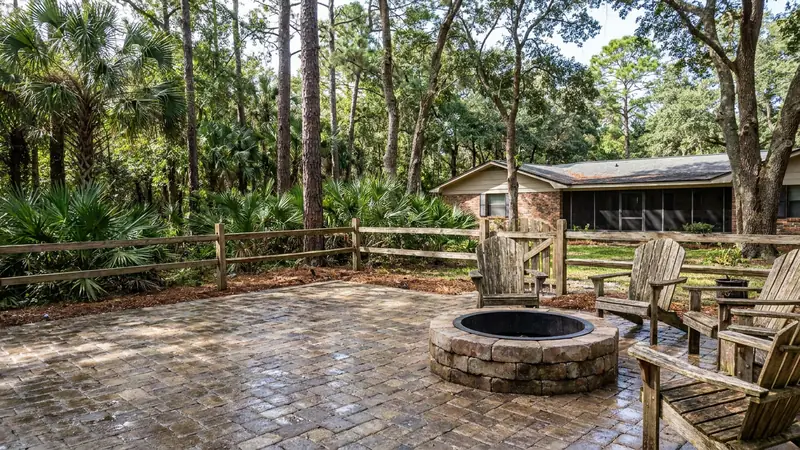
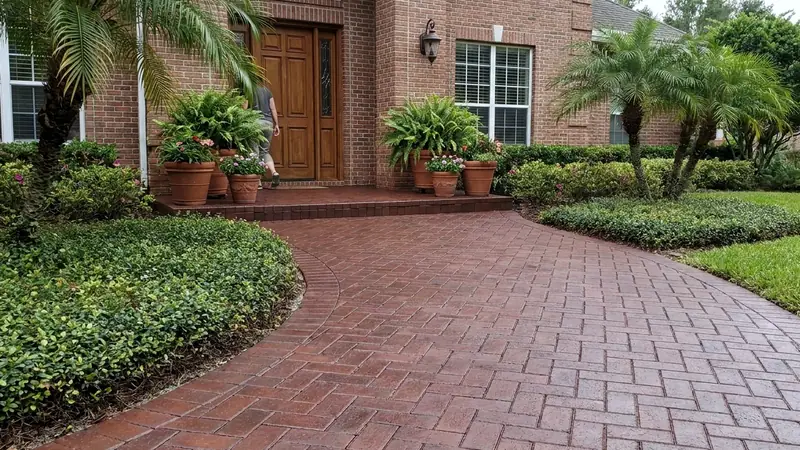
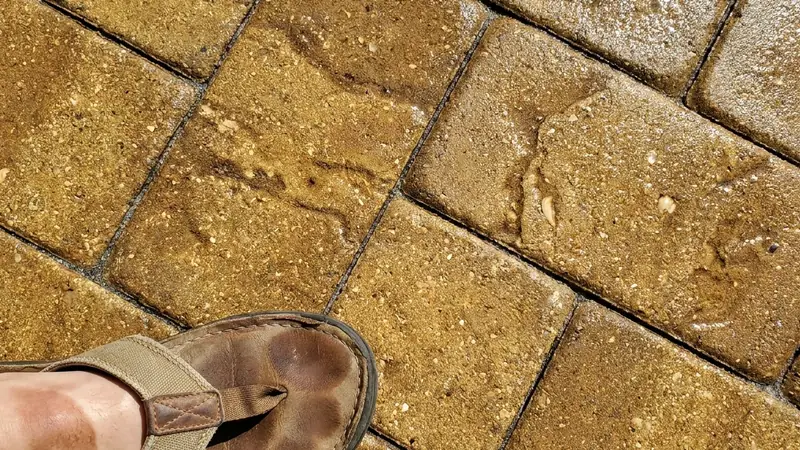
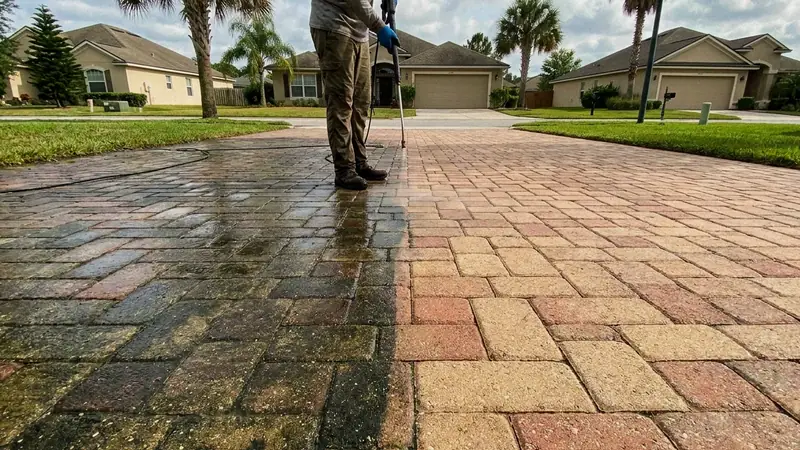
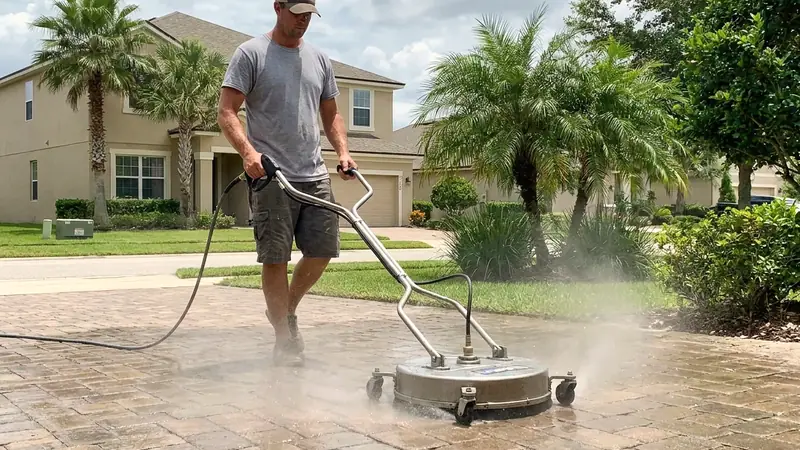
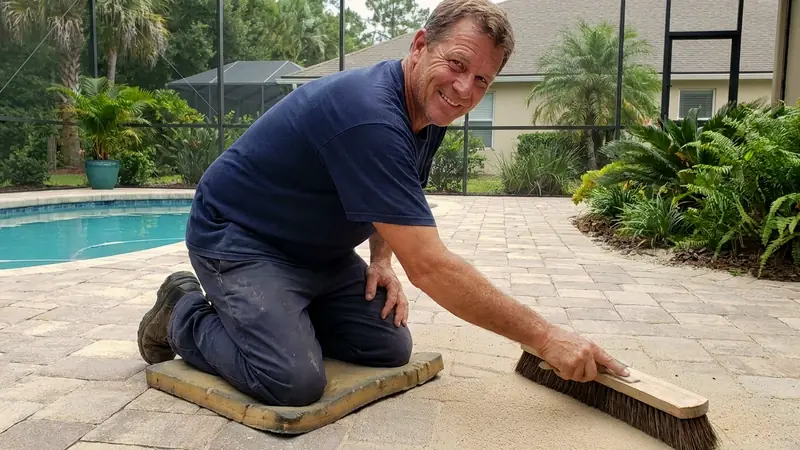
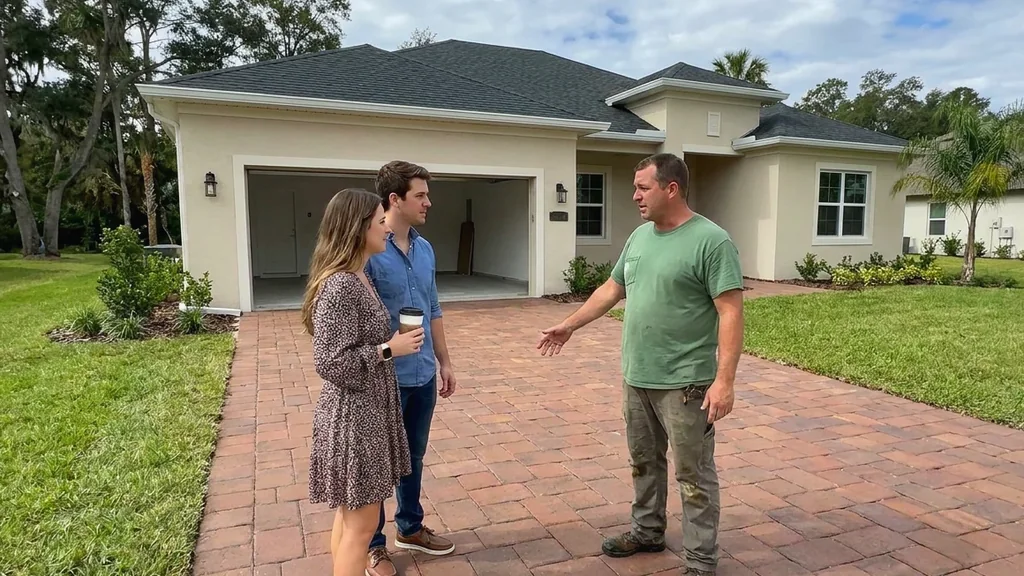
What do sealed pavers look like around Lakeside?
Why local matters in Lakeside
A contractor who works Lakeside will ask where your street sits against Doctors Lake, since that tells them how much silt and green film to plan for. They will also ask about Irma and Nicole, which reached homes near the lake. Someone from across the county may not think to ask, and a wrong guess shows up as haze or stains a month later. To reach a contractor who works the Doctors Lake side of Clay County, call (904) 590-4776.
Local knowledge also helps with timing. Lakeside gets hard summer storms, and a low corner of a drive can hold water long after the sky clears. A contractor who knows that will not seal to a calendar. You can request a free estimate and ask how the contractor decides when your pavers are dry enough.
Lakeside homes come from many decades, so the pavers do too. A contractor used to the area has seen 1970s ranch drives, 1980s pool decks and newer lanais, and knows each wears differently. That helps when a coat is chalky or patchy and its history is a mystery. If that sounds like your home, request a free estimate and mention roughly when it was built and whether the pavers have ever been sealed.
How did Lakeside grow from farmland to a community of 31,275?
It grew fast. Lakeside had 10,534 people in 1980 and 29,137 in 1990, and the 2020 census counted 31,275. The Doctors Lake basin was farm and forest before it filled with homes and shops. If your home went up in that rush, the pavers may be due for a look, so request a free estimate.
Some of Lakeside's past still shows. The Yerkes primate research center opened in 1930 about a mile west of Orange Park, and Foxwood Center on Kingsley Avenue keeps some of its lab buildings. St. Johns River State College's campus on College Drive was developed in 1977, and the Thrasher-Horne Center for the Arts opened there in 2004. If your street is close to one of these, call (904) 590-4776.
Frequently Asked Questions
Does Lakeside heat and rain make sealing worthwhile?
For most surfaces, yes. Sealer locks sand into the joints, so rain moves less of it, and weeds find less room. Lakeside storms are hard in summer, which makes that useful. Sunken pavers are the exception, since they need a reset first. Ask the contractor to look over the whole lot, not only the driveway.
What is the average cost to seal pavers in Lakeside?
Published prices in the region run $1.75 to $3.25 per square foot for the wash, the sand and the sealer. Old sealer, lost sand and total size decide where a Lakeside job lands. Ask for the square footage in writing, and check that the price covers all three steps. Pool decks and walks are often left off a first guess, so list every surface.
Is it better to spray or roll paver sealer on a Lakeside driveway?
Both, in most cases. A Jacksonville company says crews typically spray the sealer and then back-roll it. The roller works product into the joints and smooths the coat. Ask how it will go on your pavers. Back-rolling also helps the coat reach the joints on textured pavers.
Why is paver sealing so expensive in Lakeside?
Most of the money goes to prep rather than the sealer itself. By one Jacksonville company's count, prep takes two to three hours for every hour of sealing. Smaller jobs run higher per square foot, since setup is spread over fewer feet. Ask the contractor to say what each line of the quote includes. Ask whether the price includes a second coat.
What if I do not know what is on my Lakeside pavers now?
That is common, and it is not a dead end. The contractor checks the surface, may try a small test spot, and tells you which sealer can safely go on. A failed or peeling coat may have to come off first. An old receipt or a product name from a past owner would help, and your closing papers are a good place to look. Keep any old paperwork with the home's other records.
How soon after high water can Lakeside pavers be sealed?
Once they are clean and fully dry. Water from Doctors Lake can leave silt, and sealer would lock it in, so the wash comes first. Sand that left the joints is replaced. Say if water has reached the drive before, because that changes the wash plan. A contractor who asks about past storms is paying attention to the right things.
When can I park on a Lakeside driveway after sealing?
Plan on about a day. A Jacksonville company says to expect walking within a few hours and driving after roughly a day. Another company asks for 2 to 4 hours before walking and 24 hours before vehicles. Damp air can stretch both, so ask when your own pavers are ready. A sprinkler cycle at the wrong hour can undo a day's work, so ask about the timer.
Does a Lakeside pool deck need a slip-resistant additive?
It is worth asking. A glossy coat can feel slick under wet feet, and one St. Augustine company adds a slip-resistant additive to pool deck sealer. A Northeast Florida company says added grip is available with a gloss or matte finish. Ask which option fits your deck, and ask for a small test patch if the finish is new to you. A small test patch near the garage is a fair request.
Ready for a Free Estimate in Lakeside?
Call (904) 590-4776 and tell us about your pavers.
Free, no obligation