
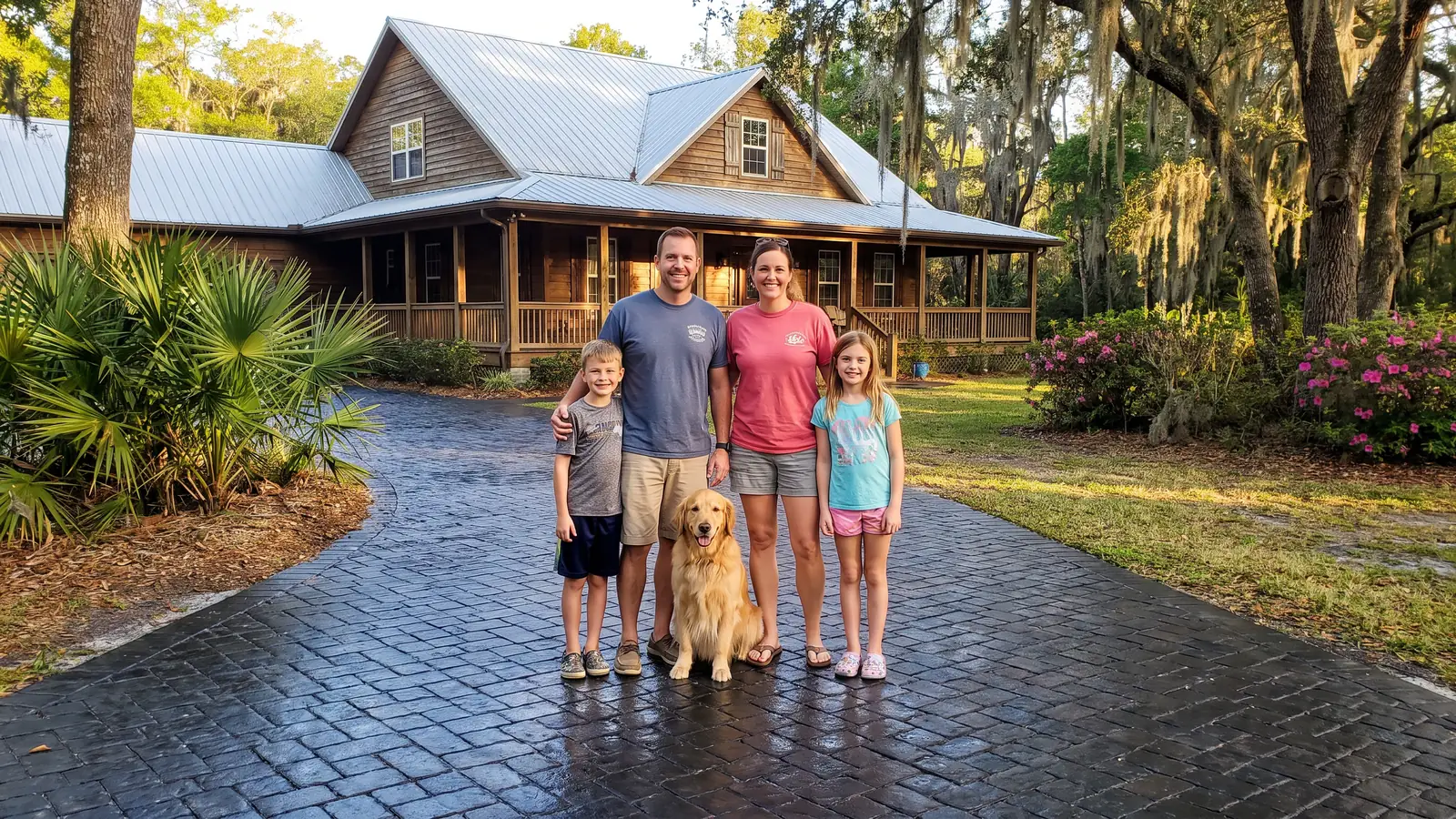
Paver sealing for Panama Park homes
Paver Sealing in Panama Park, FL
Where the Trout River is half a mile wide, Panama Park pavers can get a free sealing estimate at (904) 590-4776.
- Brings out deeper paver color
- Fresh joint sand helps lock pavers in place
- Gives weeds less room to grow
- Makes the surface easier to keep clean
- Free estimate, no obligation
Request a Free Estimate
Free, no obligation.
Fast, careful paver sealing in Panama Park
Paver sealing is available across Panama Park, from the streets near North Main Street to the blocks closer to the Trout River. Driveways, front walks and patios get cleaned, re-sanded and sealed by a local contractor, with a free estimate first. A Panama Park homeowner who decides to request a free estimate hears back within 1 business day, usually much sooner.
Think of a driveway that has gone green along one edge, with gray joints and a dull face where the sun hits. A wash, new sand in the joints and an even coat bring it back to one color. To talk first, call (904) 590-4776 and tell the contractor what your pavers look like. The estimate carries no obligation, and you can ask any question that comes to mind.
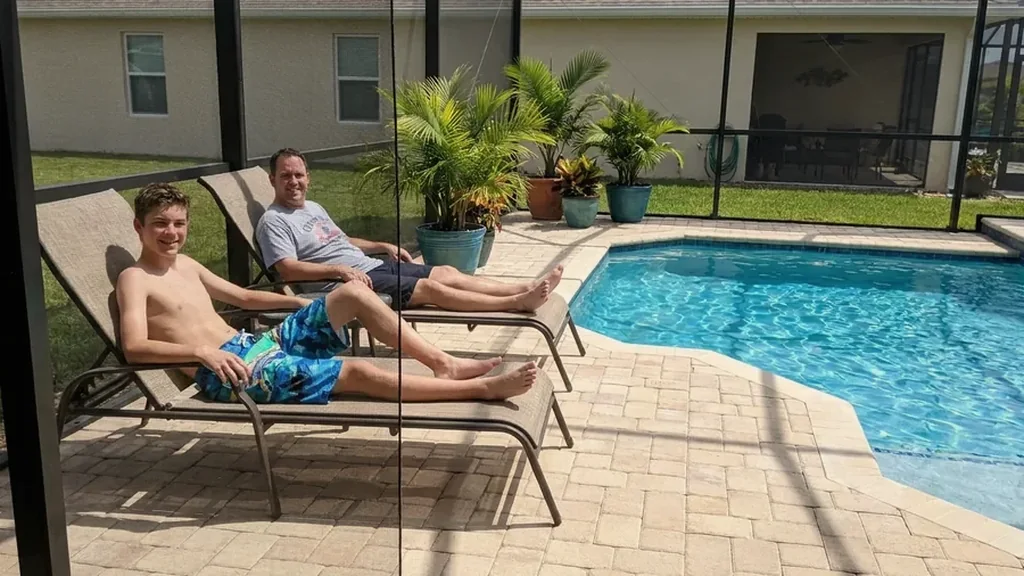
Why hire a local paver sealing contractor in Panama Park?
Panama Park sits between two rivers and carries old street trees and older brick homes, so a paver job here calls for local judgment. To hear how that applies to your yard, request a free estimate.
Look first, price second
A local contractor inspects your Panama Park pavers at no charge, then puts a price on paper before any work starts.
Posted prices, plainly
The range local companies post is $1.75 to $3.25 per square foot for the wash, the new sand and the seal.
Finishes to pick from
Matte keeps the natural look under the trees. A wet look adds depth and shows scuffs sooner. The choice is yours.
No pressure
Asking for an estimate does not commit you to anything. You can choose the day, or choose to wait and think.
Get Your Free Estimate in Panama Park
Tell us about your pavers in Panama Park.
Free, no obligation
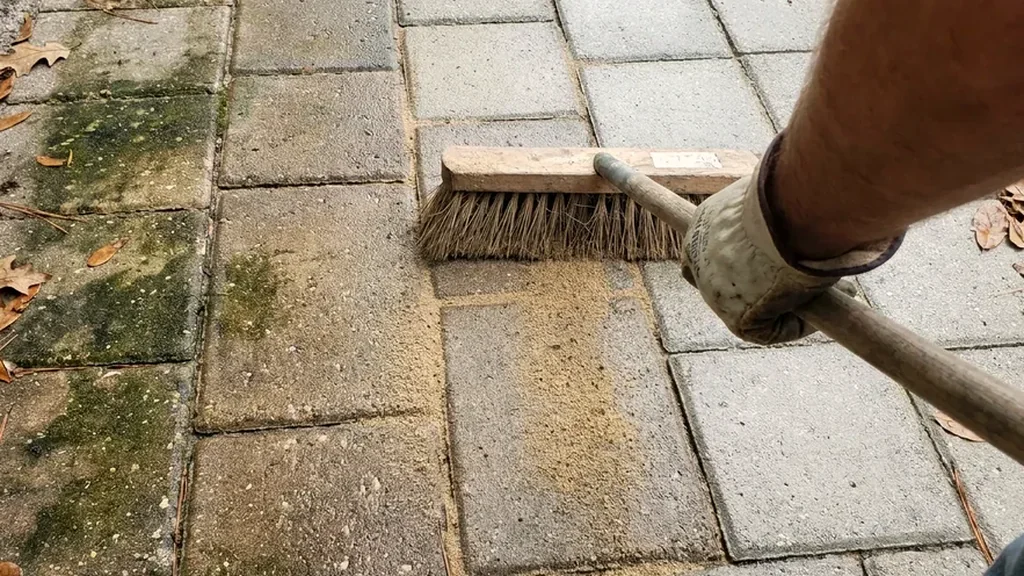
What paver problems show up most in Panama Park?
Pavers that stay damp between two rivers
Two rivers frame Panama Park, and the lower Trout River is brackish. Water is never far away in this part of town. Yearly rain here runs near 52 inches. The USDA says the water table in the Ortega soil series, first described in Duval County, can rise above 48 inches for a day or more after heavy rain. Damp pavers matter because sealer needs a dry surface, so the date may move. A contractor who works this area will plan for that from the start. Planning around that wet-weather rhythm is why local contractors build slack into the calendar. The Trout River runs about 20 miles through the Northside, and it is half a mile wide near Main Street.
Leaf stains under old trees
An early description of Panama Park counted more than 8,000 street trees, including magnolias, oaks, olives and cedars. If your lot sits under big branches, a St. Johns County paver company says leaf tannins, mildew and tree cover create their own cleaning needs. Shade keeps pavers damp, and damp pavers turn green. The wash has to clear all of it before any sealer goes down. Otherwise the stains stay under the coat, where no one can reach them. A light trim over the driveway is a fair question to raise at the estimate, since less shade means faster drying. Magnolias and cedars add needles and leaves too, so expect the wash to cover more than dirt.
Roots that lift a section
A Jacksonville sealing company says tree roots can crack pavers or lift a section. Sealing preserves whatever is there, so a lifted corner stays lifted under the coat. If a root has pushed up your walkway, point it out at the first visit. The contractor can say whether the section needs a reset before sealing. Resetting adds to the job, but it keeps the surface level for the years the coat lasts. On a street with big trees, walk the line of your pavers with your eyes before the contractor arrives. Ask the contractor to show you the lifted spot so you can decide on a repair before sealing.
Brick beside the pavers
An early description says most residences near 44th Street are brick. One Jacksonville cost guide says brick and natural stone are more porous than concrete pavers and need different sealer chemistry. A walk that runs from a brick step onto concrete pavers may need two products. The contractor should look at each surface before choosing one. That is also a fair question to ask when you compare quotes. Brick that has weathered for years takes a gentle approach: low pressure, patience and the right product for the material. Most of the concern is moisture, so ask whether the brick steps are dry before work starts.
White haze and cloudy patches
One exterior cleaning company blames white pavers on trapped moisture, failed sealer, too much coat or poor prep. In a damp part of town, trapped moisture is the one to watch. A cloudy coat can often be stripped and redone, but that costs more than doing it right the first time. Ask when the pavers were last wet and when they last dried out. A surface that dries slowly after a rain is a good clue to share at the first visit. Do not wait for the cloudy look to spread, since a stripped coat can be cleaned and sealed again from scratch. A cloudy patch can come from one wet spot, so even a single damp corner is worth mentioning.
Do older Panama Park lots need a different kind of paver sealing job?
Often they do, because older lots tend to hold pavers of several ages. George Clark planned a railroad suburb here in 1905, started selling lots in 1910, and Jacksonville annexed the area in 1925. Over a century, owners may have added drives, walks and patios at different times, so a walk can be in better shape than a patio. Ask the contractor to read each surface by itself, and request a free estimate.
Clark's covenants called for 25-foot front yard setbacks, which can leave room for a long front walk between the house and the street. Near 44th Street, an early description says most residences are brick, and Oakwood Street has stately historic homes. Call (904) 590-4776 and say what your pavers sit beside, since brick and concrete need different care.
Culver Elementary, opened in 1916 with two eagle-topped towers, and the city's Panama Park at 6912 Buffalo Avenue are easy ways to place your block. ZIP 32208 holds 15,027 housing units, with owners in about 57 percent of the occupied ones. If you own your home, the finish and the date are your choice, and the contractor can explain the options in plain words. To begin, request a free estimate.
What does paver sealing cost in Panama Park?
Companies in the Northeast Florida market list $1.75 to $3.25 per square foot to clean, sand and seal. In Panama Park the biggest swing is usually what is already on the pavers, such as algae from shade, haze or a failed old coat. Safe Touch's page says strip-and-reseal sits higher than a plain reseal. To price your pavers after a first look, request a free estimate.
Size matters too. A small patio costs more per square foot than a long driveway, because prep time does not shrink with the surface. A locked gate or a tight side yard adds prep time on top of that, and a larger driveway usually gets a better rate, according to a Jacksonville cost guide. Call (904) 590-4776 to hear which of these apply to your lot before a date is set.
| Paved area | Typical example | Clean, sand and seal |
|---|---|---|
| 300 sq ft | Small patio or walkway | $525 to $975 |
| 600 sq ft | Two car driveway | $1,050 to $1,950 |
| 1,000 sq ft | Large driveway or pool deck | $1,750 to $3,250 |
| 1,500 sq ft | Driveway plus pool deck | $2,625 to $4,875 |
Math based on the $1.75 to $3.25 per square foot that Northeast Florida paver companies publish. Your contractor sets the actual price after seeing the surface. Repairs, leveling and stripping failed sealer are usually extra.
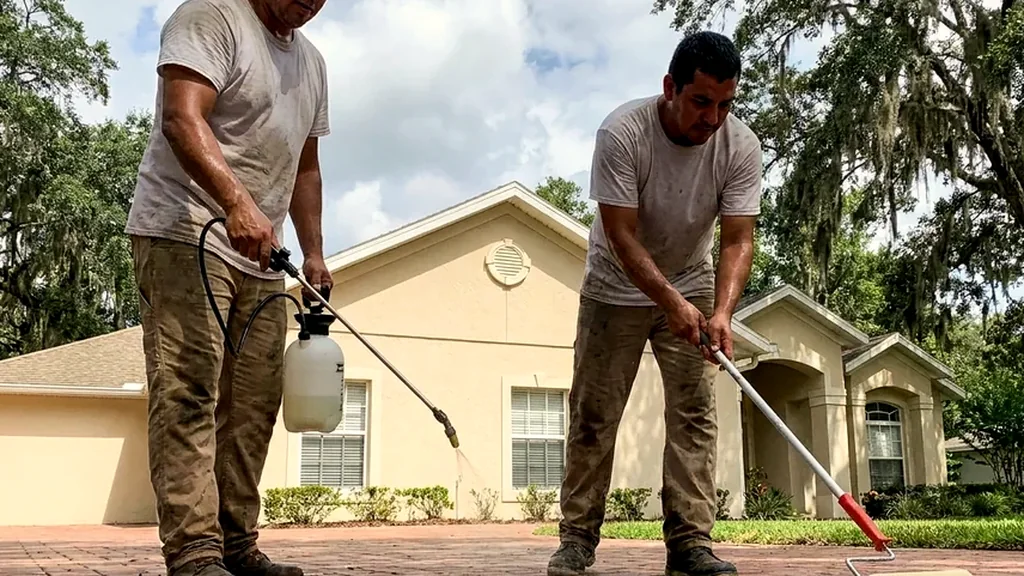
How does a paver sealing job work in Panama Park?
Check the shade and the drainage
The contractor walks the lot and notes where branches hang over the pavers and where water stands after rain. Low spots, lifted edges and root heave get written down. If the surface was sealed before, the old product matters, since water-based sealer cannot go over solvent-based sealer. You hear what turned up before anything is agreed. Ask for the price in writing. Bring up any spot that stays wet long after the rest of the yard has dried. Ask the contractor to look at the low corners first, since they hold water longest.
Clean each surface its own way
Concrete pavers, brick steps and stained spots do not all clean alike, and the contractor picks the method for each. A trade supplier cautions against going past 3,000 PSI on standard concrete pavers. Algae, leaf stains and any haze come off at this stage. Sealer would lock them in, which is why the wash comes first. Spots that resist get a second pass or a treatment before moving on. Shaded corners may need a second pass with a different method, since algae grips tight. Brick steps get a gentler wash than the concrete beside them.
Put sand back in the joints
Washing takes out joint sand, so the joints are refilled and swept before sealing, and fresh sand is what keeps the pavers from shifting. Polymeric sand needs a long dry stretch to set, a Jacksonville company notes. Joints that are full keep the pavers firm and weeds out. If your joints have sat low, this step takes a bit longer. Once they are full, the surface sweeps clean and the pavers sit snug. Joints that border a planting bed collect soil, so those lines may need extra raking before sand goes in. Fresh sand needs a dry spell to settle, so rain right after this step is worth planning for.
Wait for the damp to leave
Near the rivers, pavers can stay wet long after the sun is up. A Surebond bulletin says most of its sealers need 24 hours to dry after cleaning or rain. A Jacksonville company says to avoid sealing a damp surface or right before a forecast downpour. A careful contractor will move the date rather than seal wet pavers. A brief delay costs less than stripping a cloudy coat. A contractor may start later in the day to let the surface lose its morning moisture. A hand pressed on the surface can tell you more than a glance at the sky.
Seal and keep cars off
Sealer is usually sprayed and then back-rolled in the finish you picked. Foot traffic can return in hours, a Jacksonville company says, but cars stay off about a day. Common quotes run two to five years between coats. Shaded spots may need a fresh coat sooner than sunny ones. A wet look shows scuffs sooner than matte, so think about where tires turn. Ask what to do about rain that arrives soon after the job, since fresh sealer needs a dry stretch to cure. Ask whether shaded patches need extra time before you walk on them.
Complete paver services in Panama Park
On a Panama Park lot the order matters more than anything. Wash first, because shade and damp leave a film, then sand so the joints hold, then seal once everything has dried. For a realistic schedule on your lot, call (904) 590-4776.
Some older lots here were laid out with 25-foot front setbacks, so a front walk may be your biggest surface. Brick steps and concrete pavers can meet in one yard, and a back patio under trees collects leaves. Name your surfaces when you request a free estimate.
Stallone's Pro Wash lists four finishes, from wet look high gloss to a penetrating natural stone finish, and the right one depends on the surface. Penetrating sealers soak in and keep a natural look, which suits brick and stone. Film-forming sealers sit on top and suit concrete pavers. To talk through the right mix, call (904) 590-4776.
Rain sets the calendar near two rivers. Yearly totals run near 52 inches, with the heaviest months from May to September. Pavers can stay damp after rain, so a contractor often builds in a spare day. To ask about timing for your street, request a free estimate.
Questions to ask before you hire
- Will the joints be refilled with polymeric sand before sealing?
- What happens if it rains the night after the job?
- Will you send a written estimate before any work begins?
- Is the price per square foot, or one price for the whole job?
- Will you test a small spot before you seal the whole driveway?
- Can you tell me what is in the sealer you plan to use?
- How many years should the sealer last on a driveway that gets full sun?
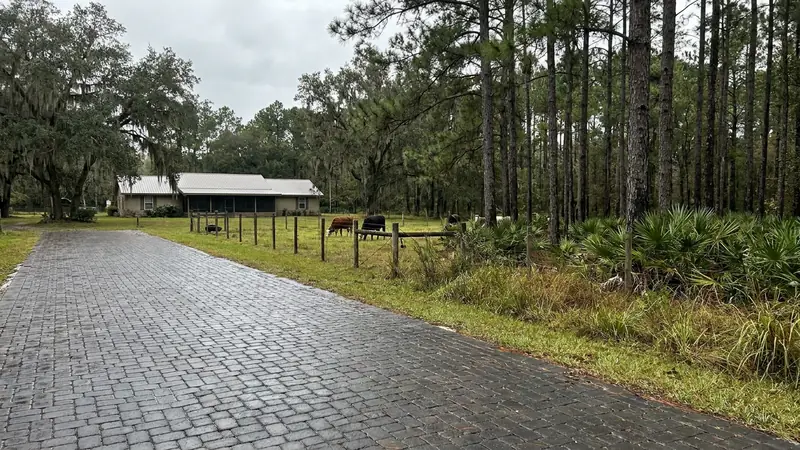
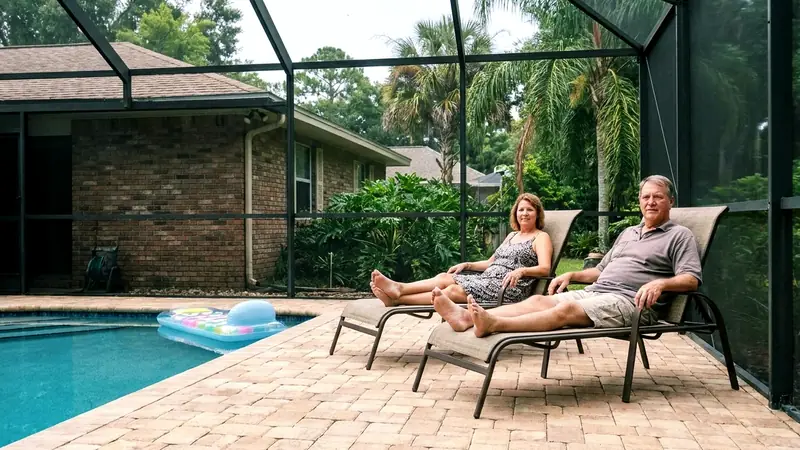
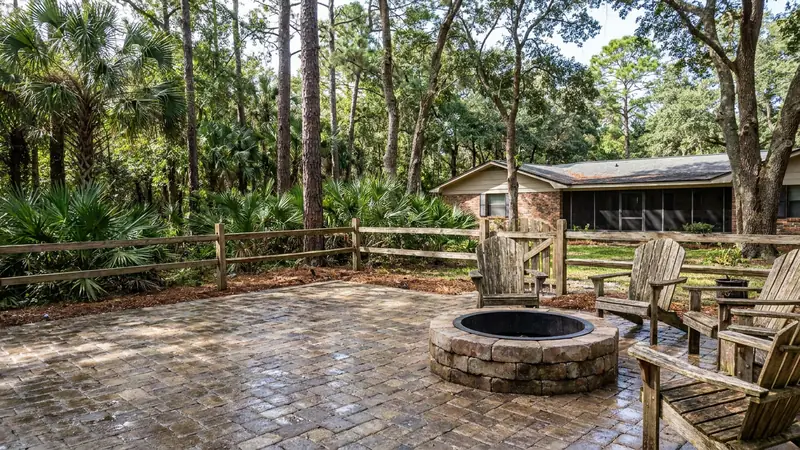
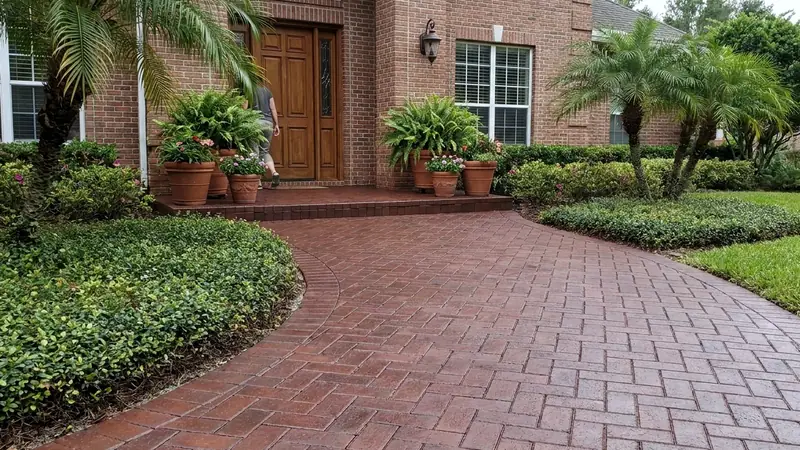
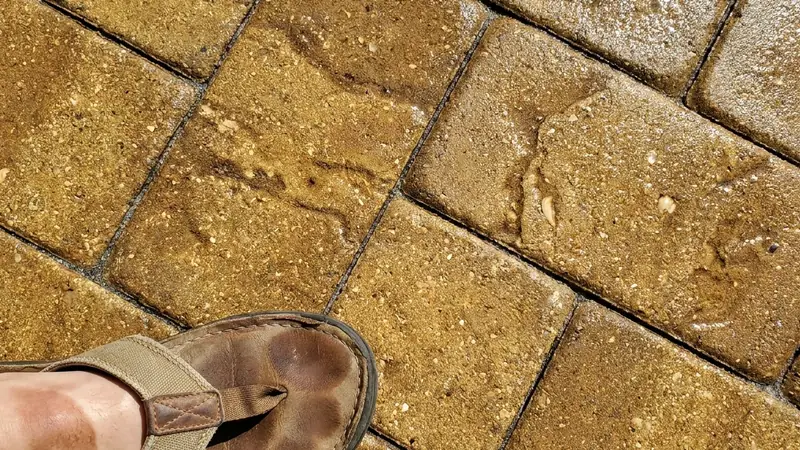
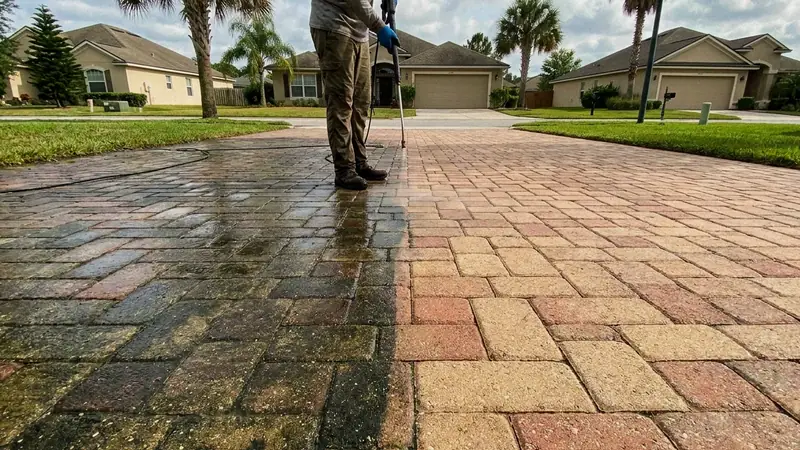
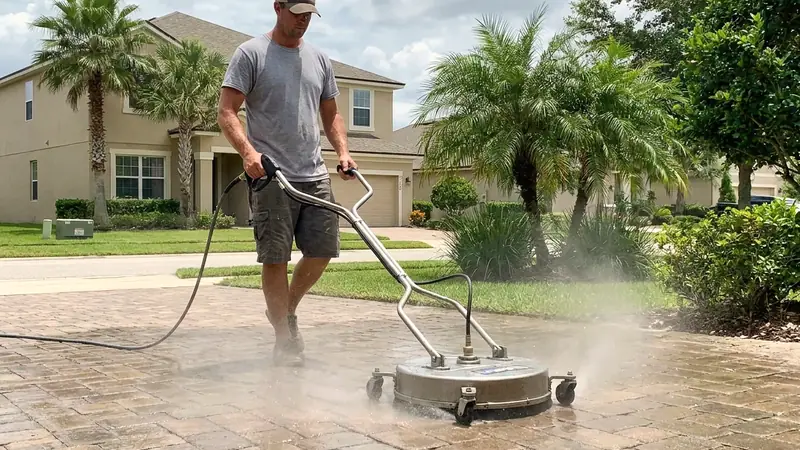
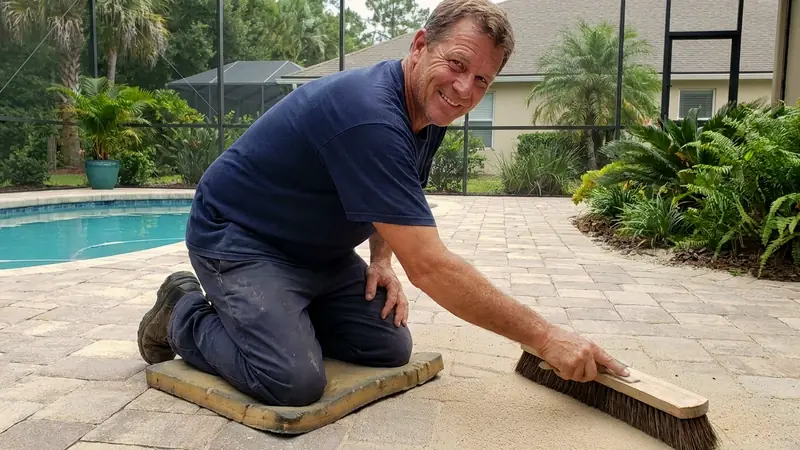
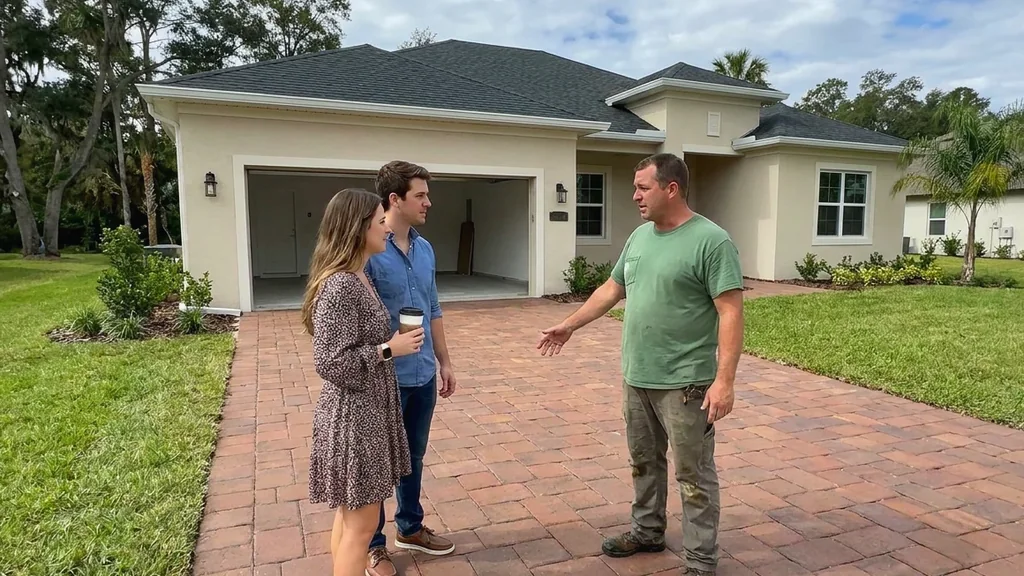
What do sealed pavers look like around Panama Park?
Why local matters in Panama Park
A contractor who works near the Trout River knows the river's tides reach far upstream and pull hard near Jacksonville. That is one reason pavers by the water can stay damp. A local contractor plans the washing and the drying around it. For a contractor who knows the Trout River side of Duval County, call (904) 590-4776.
A local contractor will ask what hangs over your pavers and when the leaves fall. That tells the contractor whether to plan extra cleaning for stains, and it shapes how long the pavers need to dry. You can request a free estimate and ask how shade changes the plan for your yard.
Good questions at the door save trouble later. Ask which sealer goes on, what finish it leaves, and whether joints get new sand. Ask for the price in writing before work begins, and ask who to call if a spot looks uneven after it dries. If you would like help with the list, request a free estimate, with no obligation.
Which Panama Park landmarks tell a contractor where my corner is?
Start with the city's Panama Park at 6912 Buffalo Avenue, between 59th and 60th Streets, which the city bought as ten acres in 1929. The Bert Maxwell Boat Ramp, opened in 1961 just west of the I-95 bridge over the Trout River, is another good marker. Culver Elementary works as well, so when you request a free estimate, name the one closest to you.
The place has deep roots as a working neighborhood. Charles Sibbald built East Florida's first steam-powered sawmill here in 1828, and Cummer Lumber was founded here in 1896. The Old Trout River Bridge Pier dates to 1930, and the swing bridge over the Trout River was built in 1938. If one of those sits near your block, call (904) 590-4776 and say so.
Frequently Asked Questions
Is sealing pavers good for Florida homes, and does Panama Park need it?
Yes, and the damp here is one reason. Shade and about 52 inches of yearly rain keep pavers wet, which feeds algae and stains, and a sealed surface washes clean more easily. Sealing does not fix sunken pavers, so those are reset first.
Do Panama Park pavers get cleaned, sanded and sealed in one visit?
Usually as one job, though the steps are spread over time. The pavers must dry between washing and sealing, and a Surebond bulletin says most of its sealers need 24 hours after cleaning or rain. Ask how many days your job needs.
How long do paver sealers last near the Trout River?
Most quotes land between two and five years. Shaded, damp spots may need a new coat sooner than sunny ones. A splash test helps: water that beads means the coat works, and water that soaks in fast means it is spent.
Why is paver sealing so expensive in Panama Park?
Time, mostly. A Jacksonville company says each hour of sealing follows two to three hours of prep. Washing, re-sanding, drying and stripping old coats add up, and small jobs cost more per foot.
What is the average cost to seal pavers in Panama Park?
Posted rates run $1.75 to $3.25 per square foot to clean, sand and seal. Shade growth and old sealer move a job around inside that range. Ask for measured square feet so bids line up.
Can a brick step beside my pavers be sealed too?
Yes, though brick may need its own product. One Jacksonville cost guide says brick and natural stone are more porous and need different sealer chemistry. The contractor should look at each surface before choosing.
What do tree roots do to pavers in Panama Park?
Roots can crack pavers or lift a section, a Jacksonville sealing company says. Sealing preserves a lifted corner instead of fixing it, so the reset comes first. If a root has pushed up your walk, mention it at the first visit.
Why did my sealer turn white or cloudy?
Trapped moisture is the usual cause. An exterior cleaning company lists trapped moisture, failed sealer, over-application and poor prep. A cloudy coat can often be stripped and redone, which costs more than waiting for dry pavers.
Nearby areas we serve
Ready for a Free Estimate in Panama Park?
Call (904) 590-4776 and tell us about your pavers.
Free, no obligation