
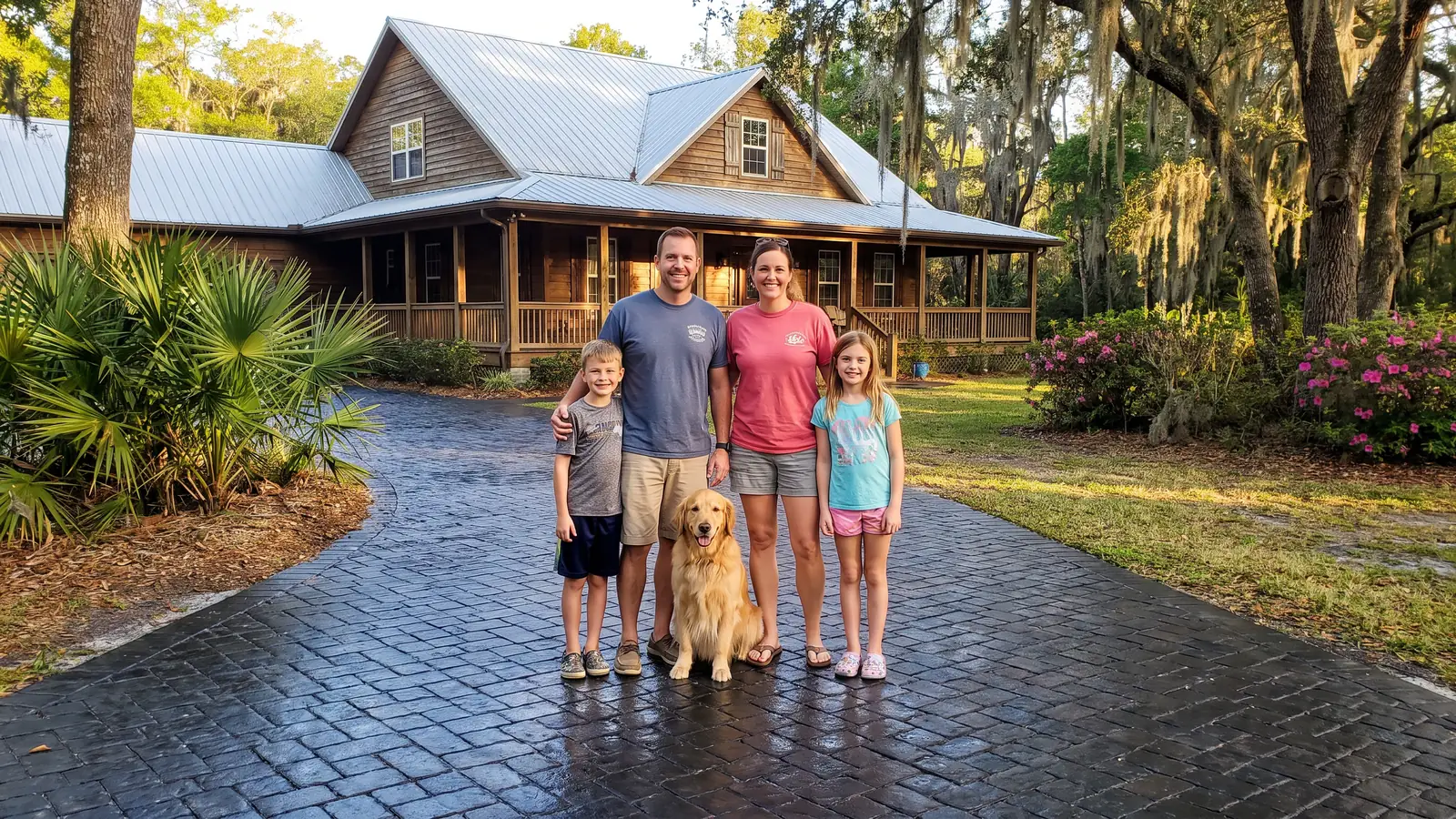
Paver sealing for San Jose homes
Paver Sealing in San Jose, FL
Spanish Revival fronts and oak shade over the St. Johns: (904) 590-4776 for a free paver sealing estimate in San Jose.
- Brings out deeper paver color
- Fresh joint sand helps lock pavers in place
- Gives weeds less room to grow
- Makes the surface easier to keep clean
- Free estimate, no obligation
Request a Free Estimate
Free, no obligation.
Fast, careful paver sealing in San Jose
Paver sealing in San Jose comes with a free estimate for driveways, walkways, courtyards and pool decks. A local contractor washes the pavers, puts sand back in the joints and seals them, so oak stains and green film are dealt with before any coat goes on. Ask for a visit and the answer comes within 1 business day, usually much sooner, so request a free estimate whenever you are ready.
Picture a driveway under a big live oak, gone green at the edges, with leaf stains across the middle and bare joints. After a wash, new sand and a fresh coat, it reads as one steady color again. To describe your driveway before anyone visits, call (904) 590-4776. Either way, the visit is free and you are not committed to anything.
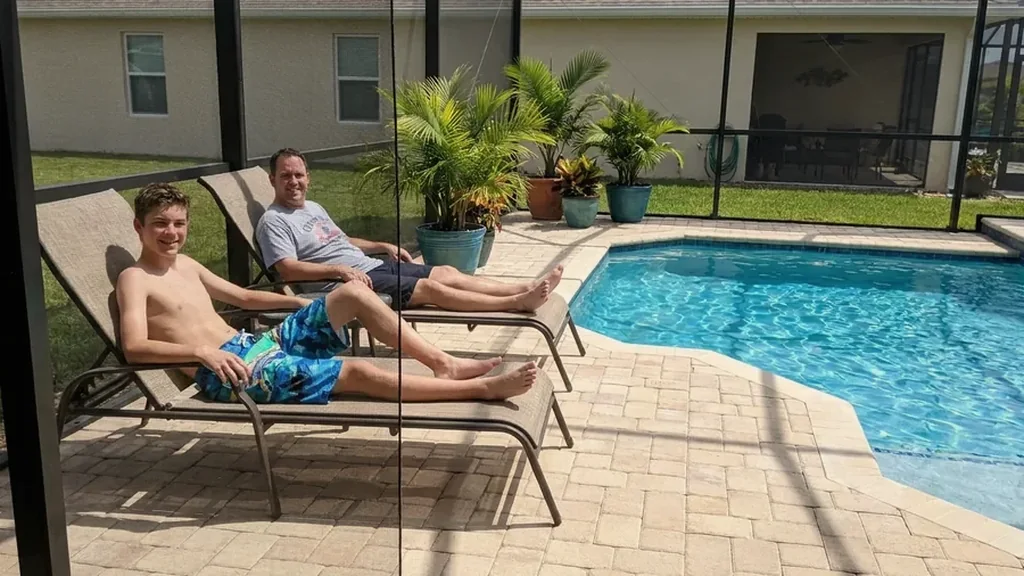
Why hire a local paver sealing contractor in San Jose?
San Jose homeowners tend to pick a local paver contractor because river air, old oaks and Spanish-style fronts all change how a job should go, from drying time to how rinse water is handled. To hear how that fits your street, request a free estimate.
A free look first
The contractor reviews your San Jose pavers at no charge, looking at shade, joints and old sealer. You get a price before anything is agreed.
A published range to compare
Northeast Florida companies commonly publish $1.75 to $3.25 per square foot. Hold any San Jose bid up against it.
Color that suits the house
A matte finish keeps quiet beside Mediterranean stucco. A wet look adds shine but shows scuffs sooner.
You make the calls
The date, the finish and the go-ahead are yours. A San Jose estimate carries no obligation.
Get Your Free Estimate in San Jose
Tell us about your pavers in San Jose.
Free, no obligation
What paver problems show up most in San Jose?
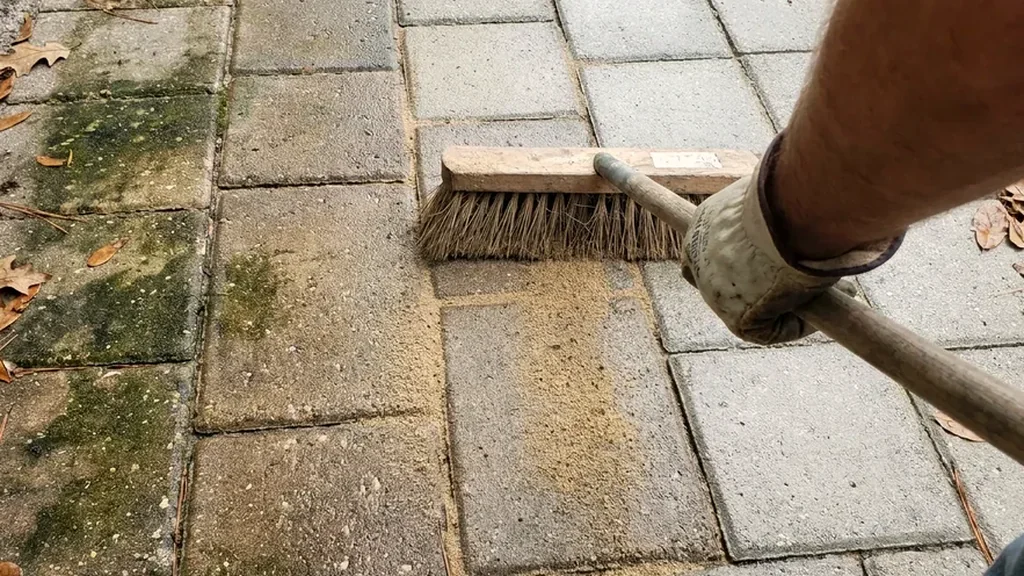
Oak drip and tannin streaks
Per Wikipedia, big oaks hung with moss shade most San Jose lawns. A Jacksonville paver company lists leaf tannins from oaks among the stains a driveway collects. Sealer locks in whatever sits on the surface, which means those brown streaks need to come out first. Under a canopy like that, a driveway can stay shaded from morning until evening. The dark film that builds up there is easy to mistake for dirt that will rinse off. Leaves collect in the joints too, and they hold moisture against the surface for days after a rain. Fallen leaves tend to sit against the edge of a driveway, so the dark band along the curb is often the first sign.
Green growth where shade stays damp
Moss and algae show up on pavers where shade is heavy and the surface stays wet. Camp Tomahawk Park, between San Jose and Beauclerc, is full of mature oak, pine and maple, a fair picture of the canopy here. A walkway on the north side of a San Jose house under that kind of cover is where the green starts. Green growth is slippery when wet, which means a shaded entry path can become a hazard before it looks bad. A walk beside a garage wall can stay damp most of the year when the sun never reaches it.
Sand that leaves the joints
Around 52 inches of rain falls on Jacksonville each year, and summer storms bring a lot of it. The soils nearby are sandy, so water moves through quickly and can carry joint sand with it. Gaps grow wider, dirt drops in and weeds follow close behind. A driveway near a downspout or a sprinkler head loses sand soonest, so look there first. The seams along a curb or a house edge are the usual place for the first gap to open.
Natural stone and older patios
San Jose has Spanish Revival bungalows and midcentury ranches, and many have courtyards or entry paths in stone or travertine. A Jacksonville cost guide says these surfaces are more porous and need different sealer chemistry. Telling the contractor what the surface is made of keeps the wrong product off it. Pool decks and courtyard floors in these older homes are worth a question at the first visit. Stone around a fountain or a front entry may have been laid long before the pavers on the driveway. If a courtyard floor is older than the house around it, ask the contractor to test a patch before choosing the sealer.
Rust from sprinkler water
Well water in Florida tends to carry iron, and a university extension notes it can leave orange stains once it is used to irrigate. If your San Jose yard runs sprinklers off a well, look for rust lines on the pavers. Those marks need attention before sealing, since sealer would trap them. The rust also shows up as orange fans across the pavers closest to the spray heads. Where a sprinkler head throws water onto the stone twice a day, the stain returns unless the head is moved.
Does paver sealing change from the riverfront to the inland streets of San Jose?
Yes, because lot size and tree cover shift as you move away from the water. Wikipedia notes that waterfront homes are large, while lots are smaller away from the river. A riverfront driveway sees more humid air and spray from irrigation, and a tight inland lot may sit in oak shade all day. Give the contractor your street when you request a free estimate, so the visit is set up right.
The original San Jose plan was drawn in 1925 with streets named for Spanish cities, in a radial pattern around the hotel. Only 31 homes were built by 1928, so most houses here came later, in styles from Spanish Revival to midcentury ranch. Older homes often have older pavers, and that can mean old sealer. Call (904) 590-4776 and mention roughly when your house went up.
Parts of San Jose were listed on the National Register of Historic Places in 1985, and Epping Forest on San Jose Boulevard was listed in 1973. A listing does not by itself cover your driveway, but some homes also sit inside gated communities with their own rules. Florida law lets an HOA require a unified look for outside improvements. Check your rules first, then request a free estimate with the finish you have in mind.
What does paver sealing cost in San Jose?
Published prices across Northeast Florida for a clean, sand and seal job run $1.75 to $3.25 a square foot. In San Jose, deep oak stains, missing sand and an old coat are what move a job up or down that range. Pool decks and walkways get measured with the driveway, so a larger layout adds to the total even at the same rate per foot. For a figure on your San Jose pavers, request a free estimate.
Access matters too. An open driveway off San Jose Boulevard is simpler than a walled courtyard where gear is carried in by hand. A Jacksonville cost guide also says smaller jobs tend to cost more per square foot. Call (904) 590-4776 and the contractor can tell you which of these apply before work is scheduled.
| Paved area | Typical example | Clean, sand and seal |
|---|---|---|
| 300 sq ft | Small patio or walkway | $525 to $975 |
| 600 sq ft | Two car driveway | $1,050 to $1,950 |
| 1,000 sq ft | Large driveway or pool deck | $1,750 to $3,250 |
| 1,500 sq ft | Driveway plus pool deck | $2,625 to $4,875 |
Math based on the $1.75 to $3.25 per square foot that Northeast Florida paver companies publish. Your contractor sets the actual price after seeing the surface. Repairs, leveling and stripping failed sealer are usually extra.
How does a paver sealing job work in San Jose?
Walk the lot and read the surface
The contractor starts by seeing how your San Jose pavers drain and where oak shade holds moisture. Sunken or lifted spots get repaired before sealing, since sealer keeps any dip it covers. A past coat matters here, since a water-based product will not go over a solvent-based one. Bring up any past pressure washing or earlier sealing, since that history shapes the plan. The walk also covers where downspouts empty, since pooled water leaves marks that return. Photos in full sun help the contractor see color and stain patterns.
Wash off the oak stains and growth
Cleaning comes next, with attention to tannin streaks, green film and any rust. Rinse water is kept off stucco, wood trim and stone where pavers meet the house. That care matters most on older Spanish Revival fronts, where the finish is hard to match. Deep stains may not come out completely, so a realistic view of the result comes before any sealer goes down. Stucco, trim and any planters nearby are noted so rinse water can be aimed away from them.
Refill the joints with sand
Washing pulls out joint sand, so it has to go back before sealing. On the sandy ground around San Jose, open joints let soil settle in and give weeds a start. Each seam is filled to the top and the faces are brushed off. Fresh sand is swept in until the joints are full, then the extra is cleared off the faces. A contractor may also check edges and borders, where the sand tends to wash out first. Sand is swept in until the seams stop taking more, then the faces are brushed off.
Let the pavers dry all the way
Sealer needs a dry surface, and one Jacksonville company says never to seal over damp pavers or ahead of a downpour. A shaded San Jose courtyard can stay wet long after a sunny driveway dries. Good contractors read the forecast first and hold off when rain is close. Ask what the contractor does if a shower rolls in, since the answer tells you how the day is handled. A pool deck or a courtyard may be left for a second visit if it is still damp.
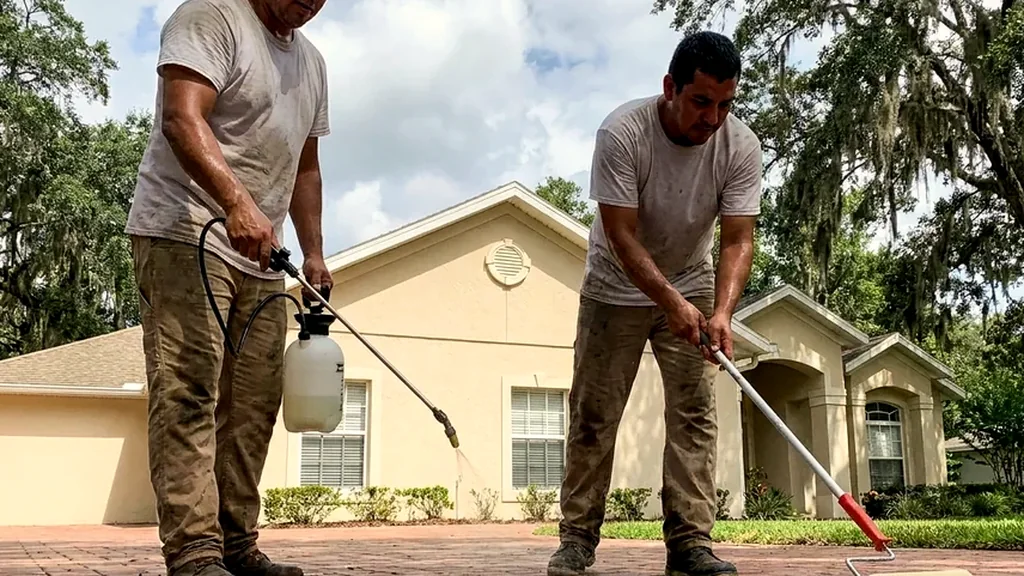
Apply the finish you chose
Last comes the sealer, often sprayed first and then rolled out so it gets down into the seams. A wet look shows scuffs sooner than matte, which is worth weighing on a driveway used daily. Companies commonly quote two to five years between coats, and a bead test shows when it is worn. Foot traffic is usually fine within hours, and cars stay off for about a day, depending on the sealer and weather. A bead test a few weeks later shows whether the coat took evenly.
Complete paver services in San Jose
A San Jose job follows a set order: wash, re-sand, dry and seal. The wash lifts oak stains and green growth, and fresh sand goes back into the joints. Sealer goes on last so nothing dirty gets trapped under it. To ask how long each stage would take, call (904) 590-4776.
Driveways take tires, oil drips and falling leaves, and the surface wears first where cars turn. Entry walks and courtyards beneath the oaks stay damp and turn green first. Pool decks near the river see humid air and splashing. Tell the contractor which of these surfaces you have when you request a free estimate.
Sealer comes down to water-based or solvent-based, then to matte or wet look. If an earlier owner used a solvent-based coat, a water-based product cannot follow it. On a Spanish Revival or midcentury front, a matte look keeps the pavers from outshining the house. Call (904) 590-4776 to talk through which fits.
Summer storms bring most of Jacksonville's rain, so a San Jose date can shift. A shaded patio behind a San Jose house may stay damp for a day or more after a driveway has dried. Sealer needs a dry surface, so the contractor may reschedule rather than seal early. For a date that fits your street, request a free estimate.
Questions to ask before you hire
- How do you remove the green algae near the sprinkler heads?
- How many years should the sealer last on a driveway that gets full sun?
- Does the sealer you use leave a wet look or a natural matte finish?
- What happens if it rains the night after the job?
- How do you handle pavers that have settled near the garage apron?
- Will the joints be refilled with polymeric sand before sealing?
- How long should I stay off the pavers, and when can the cars go back on?
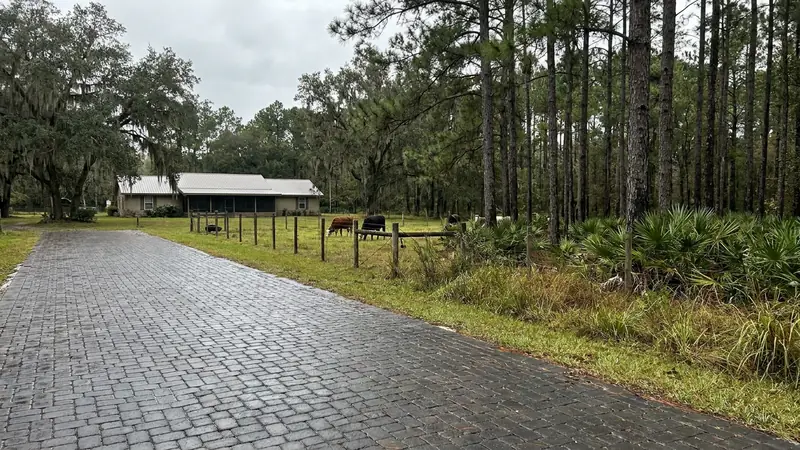
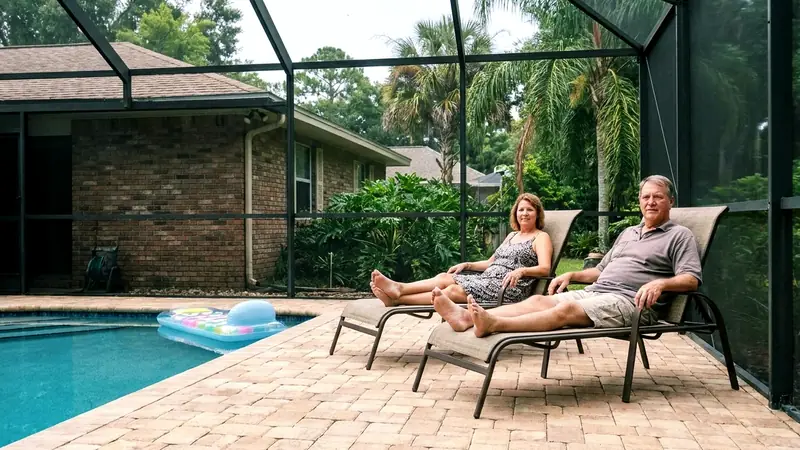
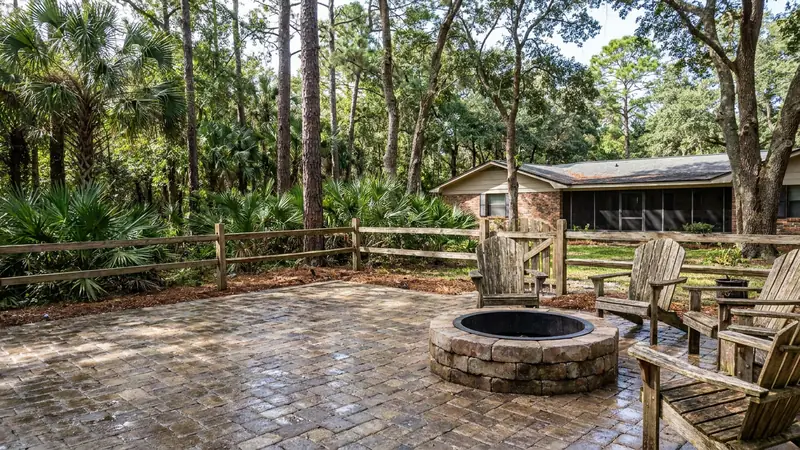
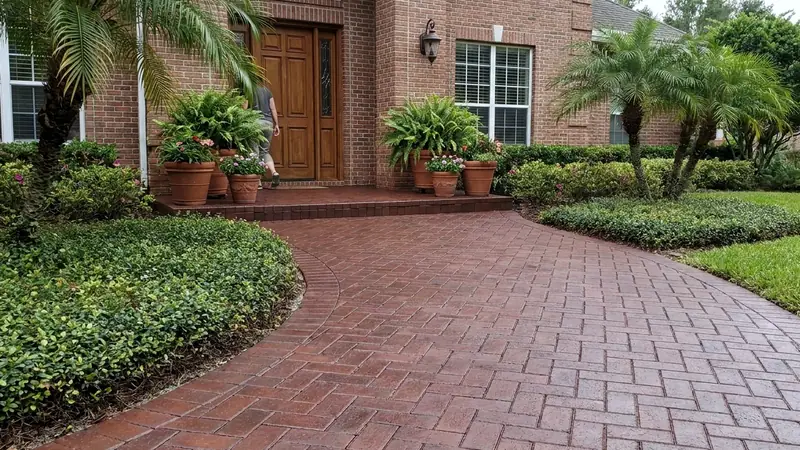
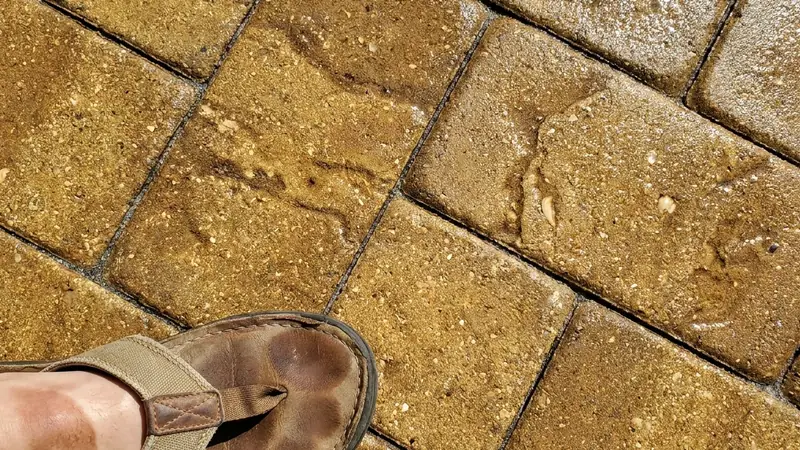
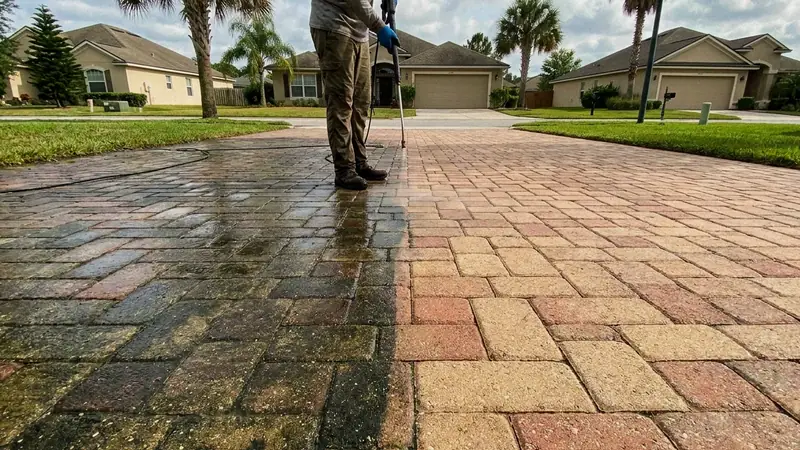
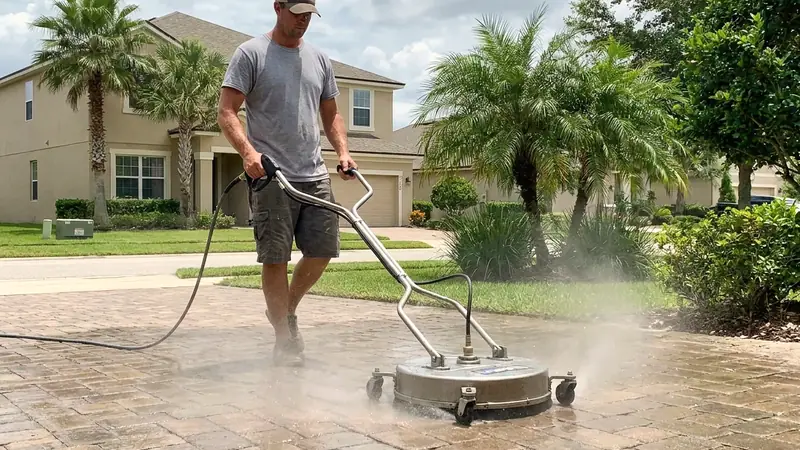
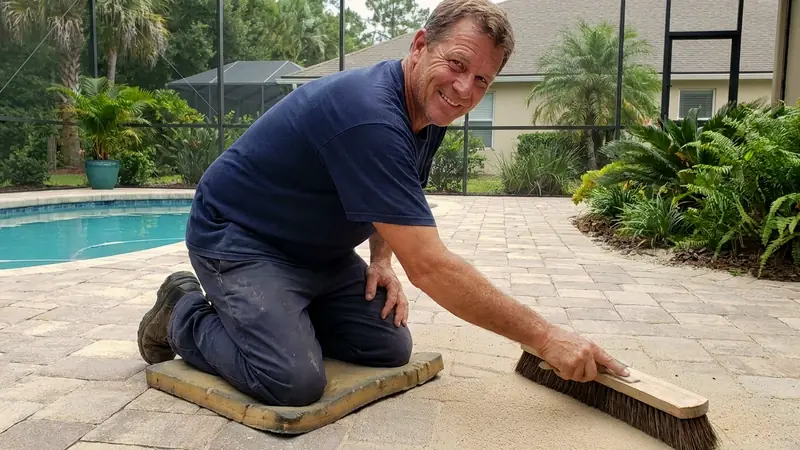
What do sealed pavers look like around San Jose?
Why local matters in San Jose
A contractor who works this side of the river knows San Jose has more than one kind of lot. A tight inland yard under oaks asks for a different plan than an open riverfront driveway. That difference changes how much cleaning comes before any sealer, how long the drying takes and what the rinse water needs to avoid. To reach a local contractor, call (904) 590-4776.
Local knowledge helps with timing too. Rain comes in quick summer bursts, and shaded pavers dry slowly. Someone who has sealed in this part of Duval County plans extra drying time for the courtyard. You can request a free estimate and ask how that gets handled.
San Jose also mixes house ages, from 1920s Mediterranean Revival to later ranches. A contractor familiar with that mix knows older stucco and stone need gentle rinsing. Gated sections may ask for notice before a crew arrives. If that sounds like your street, request a free estimate and say when the house was built; the visit commits you to nothing.
What should I know about San Jose's planned-community roots?
San Jose began as a 1925 planned community by landscape architect John Nolen, with a hotel at the center and golf by Donald Ross. The San Jose Hotel opened on New Year's Day 1926 and later became The Bolles School. The Florida land boom ended soon after, and only 31 homes stood by 1928. If you live near the school or the country club and your walkway needs work, request a free estimate.
Alfred du Pont built the Epping Forest estate in 1927 on 58 acres by the river, and the grounds later became a yacht club. Goodbys Creek divides San Jose from Mandarin, and Camp Tomahawk Park sits between San Jose and Beauclerc. I-95 was built a few miles east in the 1960s, and that kept growth away and the area mostly residential. Close to one of these spots, call (904) 590-4776 and tell the contractor your street.
Frequently Asked Questions
Will sealer help my pavers in San Jose, FL?
Yes, for most homes. Sealer helps hold joint sand and slows stains from oak drip and sprinkler rust. A San Jose lot under heavy shade may still grow green film. Natural stone and travertine need a product made for them.
What is the average cost to seal pavers in San Jose?
The published range is $1.75 to $3.25 per square foot for a full clean, sand and seal in this region. Where a San Jose job lands depends on stains, missing sand and old sealer. Have the contractor put the square footage on the quote.
Is it better to spray or roll paver sealer in San Jose?
Many crews do both. One Jacksonville paver company says professionals typically spray the sealer and then back-roll it for even coverage. Ask the contractor how they apply it on your San Jose pavers.
Why is paver sealing so expensive in San Jose?
The price covers washing, new joint sand, the sealer and drying time, not just the coat. A Jacksonville cost guide says smaller projects tend to cost more per square foot. Compare any San Jose quote with the published range.
How often do I need to reseal pavers in San Jose?
Most quotes you will hear put a coat at two to five years. Dense oak cover and daily car use push a San Jose driveway toward the low end. If water beads on the pavers, the coat is still working.
Do HOA rules affect paver sealing in San Jose?
They can. Florida law lets an HOA board require owners to follow an existing unified look for outside improvements. Read your rules and ask before choosing a wet look or a new color.
Can new sealer go over old sealer in San Jose?
Only some of the time, because water-based sealer cannot be layered over a solvent-based coat. The old product has to be named before a new one is chosen. Hazy or flaking sealer from a past job must be stripped before a new coat.
Does sealing fix sunken pavers on a San Jose driveway?
No, sunken pavers need repair first. One Jacksonville company says sealing preserves a sunken or lifted section, so those spots are fixed before the coat goes on. Show the contractor each low spot when they come out.
How long should I stay off my San Jose pavers after sealing?
Plan on walking on them after a few hours and keeping cars off for about a day, as one Jacksonville company advises. Shade and humidity can stretch that time. The contractor can give you a firm window once the product is chosen.
What do San Jose homeowners pick, matte or wet look?
It depends on the house and the use. Matte keeps a quiet look beside Spanish Revival stucco and hides scuffs longer. A wet look deepens the color but shows scuffs sooner on a driveway.
Will sealing keep weeds out of my San Jose paver joints?
It helps, but it is not a promise. Washed and re-sanded joints that are sealed hold sand longer, and weeds need open joints with soil to start. Heavy shade and wind-blown debris can still bring in some growth over time.
Is it worth sealing pavers that are only faded in San Jose?
Often yes, because faded color is the sign the surface is thin on protection. A wash restores much of the tone, and the coat helps keep it. Ask the contractor to show how a wet pavement looks next to the dry one.
Ready for a Free Estimate in San Jose?
Call (904) 590-4776 and tell us about your pavers.
Free, no obligation